Family dentistry in Cheney, Washington
A family dentist in Cheney.
One dental home. Every chapter.
From a child's first visits at our practice through orthodontics, adult preventive care, restorative dentistry, and the changing needs of older smiles, Collins Family Dentistry brings your family's care together in one welcoming Cheney office.

Recall timing, X-rays, fluoride, sealants, and treatment are selected for the individual - not automatically applied to every family member.
HOMECONTINUITY · CONTEXT · COMPREHENSIVE CARE
What is family dentistry?
General dentistry organized around
the way people and families change over time.
Family dentistry brings prevention, diagnosis, repair, and longer-term planning into one continuing relationship. Collins Family Dentistry currently welcomes patients from about age 5 through 95, allowing children, parents, and older adults to receive age-appropriate care in the same Cheney practice.6
Continuity does not mean identical treatment. One person may need sealants and orthodontic monitoring while another needs gum therapy, a crown, or a dental implant. The advantage is shared context: the team understands each person's history, the family's routines, and how needs evolve.
Explore all dental services in Cheney ↗Care that changes with you
The goal stays constant.
The plan grows with each life stage.
The AAPD defines a dental home as continuous, comprehensive, accessible, and family-centered care beginning in infancy.4 Collins Family Dentistry continues that dental-home concept for its current patient range, approximately ages 5 to 95.
Build trust, technique, and protection early
Visits focus on comfort, brushing skills, diet and cavity risk, eruption of permanent teeth, fluoride when indicated, and sealants for susceptible pits and fissures. Sealants can help prevent or arrest decay on molar chewing surfaces.3
Protect changing smiles through growth and independence
Teen care may include cavity and gum-risk assessment, sports protection, wisdom-tooth monitoring, tobacco or nicotine conversations, and orthodontic evaluation with braces or Invisalign when appropriate.
Maintain health while life gets busy
Preventive visits track gum health, wear, decay, old restorations, bite changes, and home-care challenges. When treatment is needed, options may range from a small filling to a crown, root canal, orthodontics, or cosmetic care.
Adapt care to medications, dry mouth, wear, and restorative needs
Oral health plans may need to account for medical conditions, medication-related dry mouth, recession, root cavities, mobility, existing crowns and bridges, tooth loss, and changes in dexterity or caregiving.
Recognize shared habits without assuming shared outcomes
Diet patterns, oral hygiene routines, tobacco exposure, appointment access, and attitudes toward dentistry can affect the whole household. A family dentist can notice patterns while still assessing every person's risk independently.
A preventive visit, personalized
More than a cleaning.
A repeating cycle of listening, detecting, and adjusting.
The ADA recommends brushing twice daily with fluoride toothpaste, cleaning between teeth daily, limiting sugar, and seeing a dentist regularly. It also emphasizes that professional recall and home-care recommendations should be tailored to the individual.12
Review goals, health changes, habits, and concerns
Each visit begins with context. New medications, pregnancy, pain, sensitivity, sleep, diet, tobacco use, dental anxiety, and changes at home can all affect oral health and planning.
Evaluate teeth, gums, bite, and oral tissues
Dr. Collins looks for decay, cracks, wear, gum inflammation, recession, failing restorations, bite changes, and soft-tissue findings. The findings shape the next steps.
Remove deposits and refine home-care technique
A professional cleaning removes plaque, stain, and calculus as indicated and creates an opportunity to demonstrate brushing and interdental cleaning around the areas that need the most attention.
Use X-rays only when the expected information matters
Imaging is selected according to age, prior records, symptoms, disease risk, and examination findings rather than automatically repeated at every visit.
Match fluoride, sealants, and home care to risk
Professional fluoride, sealants, prescription products, diet changes, and cleaning tools are recommended only when they fit the person's age, tooth anatomy, cavity or gum risk, and preferences.
Set the next visit according to individual need
Recall frequency is based on active disease, cavity and gum risk, age, home care, restorative history, and ongoing treatment. Family members may appropriately have different schedules.
A fixed six-month schedule is common, but it is not a universal rule. The right interval is the one supported by the individual's current risk and treatment needs.
A comprehensive family practice
Prevention is the foundation.
Repair, alignment, and restoration stay connected.
Family dentistry works best when each service is considered in the context of the whole mouth. A filling should preserve healthy tooth structure. Orthodontics should support function and cleanability. A crown or implant should fit the bite and long-term maintenance plan.
Checkups, cleanings, fluoride, sealants, and gum monitoring
Preventive care identifies changes early, removes deposits, supports home care, and applies targeted preventive treatments when indicated.
- Individual recall and X-ray planning
- Cavity and periodontal risk assessment
- Age-appropriate hygiene and nutrition guidance
Fillings, inlays, onlays, root canals, and same-day crowns
Restorative options are selected according to the size and location of damage, remaining healthy tooth, symptoms, bite forces, and appearance goals.
Orthodontics, cosmetic dentistry, bridges, and implants
When the goal extends beyond repair, the practice can coordinate tooth movement, appearance, bite, and tooth replacement in a sequence designed around the whole smile.
Why families choose one practice
Convenience matters.
Continuity creates the deeper value.
A dental home gives every family member a familiar place for prevention and a trusted starting point when something changes. The team can compare current findings with prior records, coordinate services, and adapt communication to each person's comfort.
History stays visible
Long-term records reveal changes in decay, gums, wear, bite, restorations, and home-care needs that a single snapshot cannot show.
Establish care in Cheney ↗Familiarity can lower the barrier to care
Children and adults return to a team they know, which can make it easier to discuss anxiety, symptoms, finances, and treatment priorities.
What to expect as a patient ↗Services are sequenced around the whole mouth
Prevention, fillings, gum care, orthodontics, cosmetic treatment, crowns, implants, and sleep-related care can be considered together.
View all services ↗Shared routines become easier to address
The team can help a household improve brushing, sugar exposure, tobacco habits, sports protection, appointment routines, and other shared behaviors.
Read family dentistry FAQs ↓
Family-centered does not mean one-size-fits-all
One relationship.
Different conversations for different people.
A five-year-old, a teen in braces, a parent with gum inflammation, and a grandparent with crowns or implants should not receive the same visit. Family dentistry connects the records and relationship while adapting the clinical plan, language, pace, and preventive advice.
Use age-appropriate explanations, build independence gradually, involve caregivers, monitor development, and refer to pediatric specialists when needs exceed the practice's scope.
Integrate medical history, medications, gum and bone health, restorative maintenance, function, appearance, and the practical realities of home care.
A Cheney dentist with local roots
Care gets more useful
when the relationship has history.
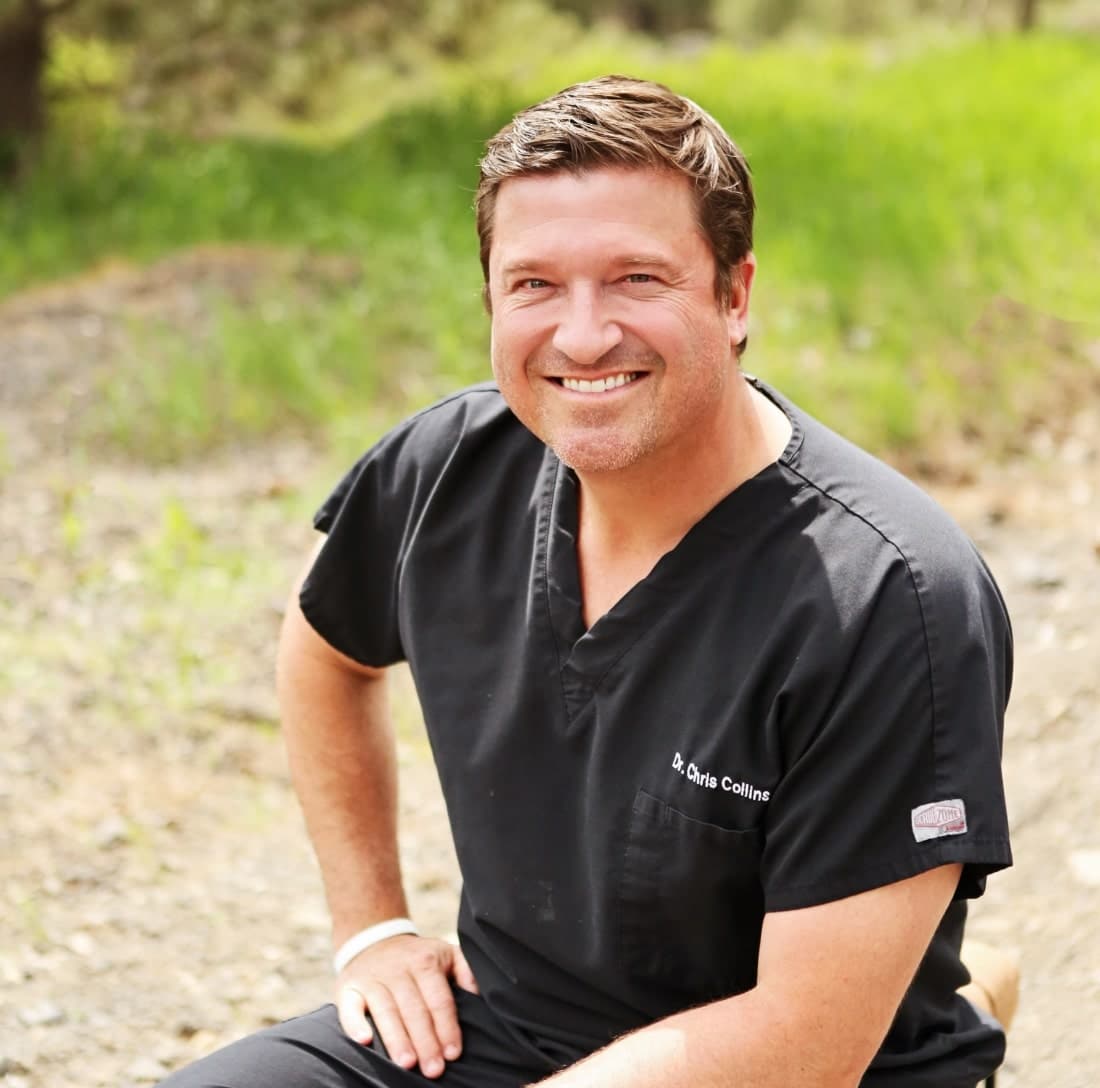
Dr. Chris Collins earned his Doctor of Dental Surgery degree from Creighton University in 2005 after completing a biology degree at Washington State University. He has practiced at Collins Family Dentistry since 2005 and continues advanced education across restorative, cosmetic, and orthodontic care.6
The practice has served Cheney since 1970. That continuity supports a simple philosophy: meet patients without judgment, explain options clearly, and build care around where they want their oral health and smile to go next.
“The most effective family care is personal enough to change as each patient grows, heals, and sets new goals.
Your family's first visit
Arrive with your history.
Leave with a plan you understand.
The official patient resources page says new-patient care begins with listening to goals, followed by an examination, appropriate X-rays, and treatment recommendations with alternatives explained when possible.6
Share records, medications, and health changes
Ask a previous dentist to send useful records and images when available. Bring an updated medication list and describe health conditions, allergies, pregnancy, prior treatment, and current symptoms.
Tell the team what would make the visit easier
Share dental fear, sensory needs, past experiences, preferred explanations, or concerns about discomfort before treatment begins. The practice describes its environment as welcoming and nonjudgmental.
Expect an individual examination and risk discussion
Each family member is evaluated separately. The same household may need different X-rays, preventive treatments, recall intervals, and restorative recommendations.
Review priorities, options, timing, and cost
When care is recommended, ask what is urgent, what can be monitored, which alternatives exist, how treatment affects the rest of the mouth, and what financial arrangements are available.
Your dental future matters more than your dental past
Being overdue does not disqualify anyone from respectful care. The next useful step is an honest examination and a manageable plan.
Request an appointment ↗A parent's perspective
“They used really good numbing gel and she didn't even cry. I have recommended them to friends.”
Comfort, trust, and clear expectations are especially important when a child or adult has had difficult dental experiences in the past.
Read patient testimonials ↗Family dentistry FAQs
Clear answers for
parents, adults, and caregivers.
These answers provide general education. The examination, health history, age, symptoms, and individual risk determine the actual recommendation.
Request a family appointment01What is family dentistry?
Family dentistry is general dental care organized around the changing needs of children, teens, adults, and older adults. It combines prevention, diagnosis, restorative care, and coordination with other services so one dental home can follow oral health over time.
02What ages does Collins Family Dentistry see?
The practice's official information says Collins Family Dentistry welcomes patients from about age 5 through 95. Care is personalized to development, medical history, oral health risk, comfort, and the treatments each person needs.
03How often should each family member visit the dentist?
There is no single recall interval that is right for everyone. The ADA recommends regular dental care, with visit frequency tailored to the person's cavity risk, gum health, age, home care, medical history, and active treatment needs. Dr. Collins will recommend an individual schedule after an examination.
04What happens during a family dental checkup?
A checkup may include a review of health changes and concerns, examination of the teeth, gums, bite, and soft tissues, a professional cleaning when appropriate, risk assessment, and X-rays only when clinically indicated. The visit ends with prevention guidance and a clear plan for any follow-up care.
05Are dental X-rays taken at every visit?
Not necessarily. Dental imaging should be selected according to the patient's age, history, symptoms, disease risk, prior images, and current clinical findings. Dr. Collins will explain why an image is recommended and how it will affect diagnosis or treatment planning.
06Are fluoride treatments and dental sealants only for children?
No. Fluoride and sealants are selected according to cavity risk and tooth anatomy. Sealants are especially useful on cavity-prone pits and fissures in children's and adolescents' molars, but some adults may also benefit. Professional fluoride may be recommended for patients of different ages when risk is elevated.
07Can a family dentist repair cavities and damaged teeth?
Yes. Collins Family Dentistry provides tooth-colored fillings, ceramic inlays and onlays, root canal therapy, same-day dental crowns, bridges, and dental implants. The recommended restoration depends on how much healthy tooth remains and whether the tooth can be predictably preserved.
08Can the same practice provide orthodontic and cosmetic care?
Yes. Collins Family Dentistry offers orthodontic treatment for teens and adults, including braces and Invisalign, along with cosmetic services such as whitening, veneers, bonding, and smile makeovers. These options are coordinated with oral health and bite needs.
09When should a child first see a dentist if this practice starts around age five?
The American Academy of Pediatric Dentistry recommends establishing a dental home no later than 12 months of age. Families with infants and younger preschool children should establish care with an appropriate pediatric or general dental provider, then discuss transitioning to Collins Family Dentistry when the child is ready and within the practice's current age range.
10What if my family is anxious or has missed dental visits?
The practice describes its approach as welcoming and nonjudgmental. Tell the team about past experiences, sensory concerns, fear, or embarrassment when scheduling. The first goal is to understand where each person is now and build a realistic plan for the future, not criticize the past.
Clinical and practice references
Information built on
credible patient resources.
- 01American Dental Association - MouthHealthy
Official oral health recommendations: brush twice daily with fluoride toothpaste, clean between teeth, limit sugar, and see a dentist regularly.
Review source ↗ - 02American Dental Association
Home Oral Care - evidence-based brushing, interdental cleaning, personalized prevention, and risk-based dental recall recommendations.
Review source ↗ - 03American Dental Association and American Academy of Pediatric Dentistry
Dental Sealants - evidence-based guidance supporting pit-and-fissure sealants for primary and permanent molars in children and adolescents.
Review source ↗ - 04American Academy of Pediatric Dentistry
Definition and Policy on the Dental Home - continuous, comprehensive, individualized, family-centered care established no later than 12 months of age.
Review source ↗ - 05Centers for Disease Control and Prevention
About Dental Sealants - how sealants protect chewing surfaces and when they may help prevent cavities.
Review source ↗ - 06Collins Family Dentistry
Official information regarding family dentistry, ages served, Dr. Chris Collins, patient experience, location, telephone number, and office hours.
Review source ↗
A family dentist close to home
Make Cheney the place
your family's smiles come back to.
Collins Family Dentistry provides preventive, restorative, orthodontic, cosmetic, and implant care from 1st Street near Cheney Spokane Road. The practice currently welcomes patients from about age 5 through 95.
- Monday
- 8:00 AM-2:30 PM
- Tuesday
- 8:00 AM-4:00 PM
- Wednesday
- 8:00 AM-2:30 PM
- Thursday
- 8:00 AM-2:30 PM
- Friday
- 8:00 AM-2:30 PM