Implant dentistry in Cheney, Washington
Dental implants in Cheney.
Replacement, rooted in confidence.
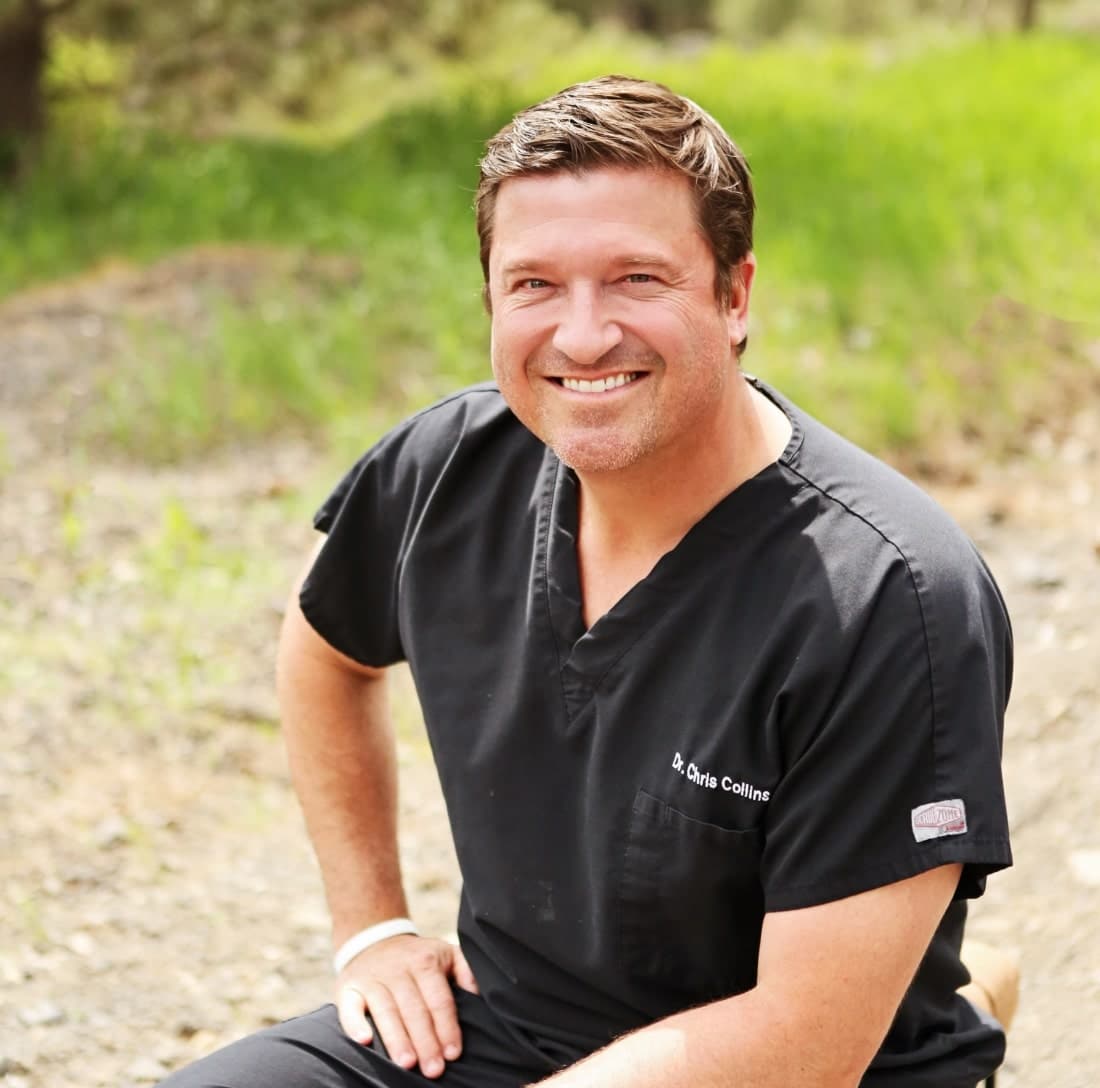
Replace one missing tooth, several teeth, or an entire arch with a restoration supported by the jaw rather than a removable appliance alone. Dr. Chris Collins plans implant treatment around your bone, gum health, bite, appearance goals, medical history, and the way you want to live with your new smile.

Implant treatment is personalized. Same-day provisional teeth and graft-free treatment cannot be promised before evaluation.
ONE SYSTEMIMPLANT · ABUTMENT · RESTORATION
What is a dental implant?
A foundation in the jaw that supports
a custom replacement tooth or prosthesis.
The implant body is surgically placed in the jawbone and functions as an artificial tooth root. An abutment typically connects that implant to the visible restoration. The restoration may be a single dental crown, a bridge replacing several teeth, or a fixed or removable full-arch prosthesis.1
Implants can restore chewing support, appearance, and stability while avoiding preparation of neighboring teeth in many single-tooth situations. They also require surgery, healing, daily plaque control, professional maintenance, and a treatment plan that respects the surrounding gum and bone.
Explore restorative dentistry in Cheney ↗A strong option, not an automatic answer
Implant candidacy is built on
health, bone, gums, bite, and maintenance.
The FDA recommends discussing benefits, risks, health, healing, and the specific implant system with your dental provider before treatment.1 Dr. Collins will evaluate the site and explain whether implants, a bridge, or another option best fits your priorities.
There is a tooth or space that needs replacement
Implants are designed to support replacement teeth. Dr. Collins first determines whether an existing tooth can be predictably restored or whether removal and replacement should be discussed.
The jaw has finished growing and surgery is medically appropriate
Implants are generally considered for adults after jaw growth is complete. Medical conditions, medications, immune function, healing history, and prior radiation treatment may influence planning or require coordination with a physician.
Active periodontal infection is addressed
Healthy tissues and manageable plaque levels are important. Untreated gum disease and prior periodontal disease can increase the risk of inflammation and bone loss around implants.3
There is adequate bone or a realistic augmentation plan
Three-dimensional imaging may be used to evaluate bone volume, nerve position, sinus anatomy, and implant trajectory. Bone grafting is considered when the available foundation is not adequate for the planned implant.
Modifiable risks are discussed honestly
Smoking can delay healing and reduce long-term success. The FDA specifically advises patients to discuss smoking because it can affect the healing process.1
The restoration can be protected from excessive force
Clenching, grinding, an unstable bite, and the position of the missing tooth influence the number, size, position, and restoration design. A protective appliance may be part of long-term care.
You can clean the prosthesis and return for monitoring
Implants are not maintenance-free. Daily plaque removal and professional evaluation help detect inflammation, loose components, wear, and bite changes before small problems become larger ones.
The dental implant process
A planned surgical foundation followed by
healing, restoration, and continuing care.
The sequence varies. Extraction, grafting, implant placement, provisional teeth, and final restoration may occur in separate stages or be combined when anatomy and stability allow. Healing commonly takes months, not days.1
Examination, imaging, and shared planning
Dr. Collins reviews your goals, medical and dental history, gum condition, remaining teeth, bite, and available bone. Imaging may include X-rays and, when indicated, CBCT planning.
Stabilize the site and complete preparatory care
Active infection, hopeless teeth, gum disease, or inadequate bone may need treatment first. Extraction, socket preservation, ridge grafting, or sinus-related procedures are considered only when the site requires them.
Position the implant in the planned location
With the area numb, the implant is placed in the jaw. The surgical approach, use of a guide, and whether the site is covered or fitted with a healing component depend on the case.
Allow bone and soft tissue to mature
During osseointegration, bone heals around the implant. The timeline is individualized and may be longer when grafting, systemic health, site quality, or other factors require additional healing.
Design and place the definitive tooth or prosthesis
After healing is verified, digital records or impressions guide the final crown, bridge, or denture. Fit, appearance, contacts, speech, and bite are checked before completion.
Monitor tissues, components, hygiene, and bite
Implants need home care and regular professional visits. The team checks the gums, bone levels, restoration, screws, contacts, and bite and updates your cleaning routine as needed.
A same-day temporary tooth may be possible when initial implant stability and the bite are favorable. It is a provisional step with specific restrictions, not a promise of immediate unrestricted function.
One system, several applications
The number of missing teeth changes
the implant and restoration design.
Implants can support a single crown, a bridge, or a full-arch prosthesis. The treatment plan is based on the span being replaced, bone distribution, remaining teeth, hygiene access, bite forces, esthetics, and whether the final teeth should be fixed or removable.4
Implant-supported crown
A single implant and crown can replace one missing tooth without preparing the neighboring teeth as bridge abutments. The implant, abutment, and crown are separate components with different maintenance and replacement considerations.
- Replaces one missing root and visible tooth
- Preserves neighboring teeth from bridge preparation
- Requires adequate site health, bone, and spacing
Implant-supported bridge
Two or more implants may support a bridge that replaces several missing teeth. Not every missing tooth necessarily requires its own implant; the number and position are engineered around the span, anatomy, force, and prosthetic design.
- Can replace multiple adjacent teeth
- Avoids a removable partial denture in many cases
- Cleaning access beneath the bridge is planned deliberately
Implant-supported full-arch teeth
Full-arch treatment may be fixed or removable and may use different numbers of implants. All-on-4 is one fixed full-arch concept, but it is not the only design and is not appropriate for every jaw or patient.
- Fixed or patient-removable configurations
- Implant-retained and implant-supported designs behave differently
- Speech, lip support, hygiene, bone, and bite guide the plan
Choosing a tooth replacement
The right solution balances biology, function,
time, maintenance, and personal priorities.
Implants are not automatically better for every person or every space. Dr. Collins will compare what is being replaced, the health of neighboring teeth, available bone, surgery preferences, cost, timeline, cleanability, and expected maintenance.
Dental implant
Supports a crown, bridge, or denture from the jaw and generally avoids using neighboring teeth as abutments.
Request an implant evaluation ↗Fixed bridge
Uses prepared teeth beside the space to support a fixed replacement. It may be considered when those teeth already need crowns or implant surgery is not preferred.
Dental bridges in Cheney ↗Partial denture
Replaces several teeth with a removable appliance supported by remaining teeth and tissues. It may offer a different cost and treatment pathway.
Restorative options ↗Implant denture
Uses implants to improve retention or support for a full-arch prosthesis. Designs may be removable or fixed and require different hygiene access.
Explore All-on-4 ↗
When an entire arch needs replacement
Full-arch implant treatment is not one product.
It is a spectrum of support and removability.
Implant-retained removable dentures primarily gain retention from implants but may still transfer significant chewing force to the gums. Implant-supported designs transfer more force through the implants and may be fixed or removable. The number and position of implants, available bone, hygiene access, lip support, speech, and restorative space shape the recommendation.
The patient removes the prosthesis for cleaning. Implants can improve retention compared with a conventional denture while the tissue may continue to share support.
The dentist removes the prosthesis when service is needed. All-on-4 is one possible concept, but implant number and design are individualized rather than selected from a single formula.
Implant dentistry close to home
The implant is only one component.
The plan must anticipate the final tooth.
Dr. Chris Collins evaluates the surgical site and the restoration together. Implant position affects the final tooth shape, bite, cleaning access, gum contours, and long-term serviceability. Planning backward from the desired restoration helps keep those goals connected.
Collins Family Dentistry has served Cheney families since 1970, and Dr. Collins has practiced at the office since 2005. The practice provides single-tooth, multiple-tooth, and full-arch implant planning locally, with treatment recommendations tailored to the patient rather than a preset package.5
“A successful implant plan begins with the tooth we want to create - not simply the space where an implant can fit.
Protecting the investment
Implants cannot develop cavities.
The surrounding tissues can still become diseased.
Bacteria can cause inflammation around implants, and peri-implantitis includes loss of supporting bone. The American Academy of Periodontology emphasizes daily brushing and interdental cleaning plus regular professional checks.3
Clean every implant surface you can access
Brush twice daily and use the floss, threader, interdental brush, water flosser, or other aid recommended for your crown, bridge, or denture design.
Protect the bite and restoration
Avoid using implant teeth as tools. Clenching, grinding, and very hard foods may damage crowns, porcelain, screws, or prosthetic components even when the implant remains integrated.
Keep periodontal and implant maintenance visits
The team monitors plaque, probing findings when appropriate, gum changes, bone levels, mobility, screws, contacts, and bite.
Report changes early
Call if the implant restoration feels loose, gums bleed or swell, cleaning becomes painful, the bite changes, or you notice drainage, a persistent bad taste, or numbness.
The implant and the visible tooth do not age identically
The implant body may remain stable for many years, while the crown, bridge, denture teeth, attachments, or screws may require maintenance or replacement sooner. No component should be described as guaranteed for life.
Call (509) 235-8451 ↗Patient perspective
“They make me feel so comfortable, they explain everything, and they never hesitate to help me.”
Implant decisions involve surgery, healing, costs, and long-term care. Clear explanations and space to compare alternatives are part of informed treatment planning.
Read patient testimonials ↗Dental implant FAQs
Questions worth asking
before replacing a tooth.
These answers provide general education. Your examination, imaging, health, bone, gums, bite, and restorative goals determine the actual recommendation.
Request an implant consultation01What is a dental implant?
A dental implant is a medical device placed in the jawbone to support a replacement tooth or prosthesis. The implant body functions as an artificial root, an abutment connects the implant to the restoration, and the visible restoration may be a crown, bridge, or implant-supported denture.
02Who may be a candidate for dental implants?
Candidacy depends on oral and general health, gum condition, available bone, growth status, medications, tobacco use, and the ability to maintain the implant. Most candidates are adults with one or more missing or failing teeth who are healthy enough for the planned procedure. An examination and imaging are required.
03How long does the dental implant process take?
Treatment commonly takes several months because the implant must heal and integrate with the surrounding bone before the final restoration is placed. Extraction healing, bone grafting, the number and location of implants, and whether a provisional restoration is appropriate can shorten or lengthen the timeline.
04Will I need a bone graft before an implant?
Not everyone needs bone grafting. A graft may be recommended when the available bone is too narrow, short, or otherwise inadequate for the planned implant. Depending on the site, grafting may be completed before implant placement or at the same appointment. Imaging and surgical planning determine the recommendation.
05Can I receive a temporary tooth the same day?
Some implants can support a carefully limited provisional tooth or prosthesis on the day of placement when primary stability, bite, bone, and the treatment plan are favorable. Immediate provisionalization is not appropriate for every implant and is not a guarantee of immediate unrestricted chewing.
06Does dental implant surgery hurt?
Local anesthesia is used during implant placement, so the area should be numb. Pressure and vibration may be noticeable. Swelling, bruising, and soreness can occur afterward and are usually managed with the individualized instructions provided by the dental team. Increasing pain, fever, drainage, or persistent numbness should be reported.
07How long can dental implants last?
Implant longevity varies and cannot be guaranteed. The implant body may remain functional for many years when bone and gum health, placement, bite, hygiene, and maintenance remain favorable. The attached crown, bridge, screws, or denture components may wear or require repair or replacement sooner.
08Is a dental implant better than a bridge?
Neither option is automatically best for every person. An implant-supported crown replaces a missing root and tooth without preparing neighboring teeth, while a traditional bridge uses adjacent teeth for support and may avoid implant surgery. Bone, gum health, neighboring teeth, timing, cost, maintenance, and personal preferences guide the choice.
09How do I clean a dental implant?
Clean implant restorations every day with the method recommended for their design. This usually includes brushing and interdental cleaning with floss, a threader, interdental brush, water flosser, or another aid. Professional examinations and maintenance visits are important because inflammation and bone loss can develop around implants.
10How much do dental implants cost in Cheney?
Cost depends on the number of implants, type of restoration, imaging, extractions, grafting, provisional teeth, sedation needs, laboratory work, insurance benefits, and treatment complexity. A consultation is needed before Collins Family Dentistry can provide an individualized estimate and review payment options.
Clinical and practice references
Information built on
credible patient resources.
- 01U.S. Food and Drug Administration
Dental Implants: What You Should Know - implant components, candidacy, healing, benefits, risks, smoking, hygiene, and follow-up.
Review source ↗ - 02American Academy of Periodontology
Dental Implant Procedures - candidacy, single and multiple tooth options, bone augmentation, and follow-up care.
Review source ↗ - 03American Academy of Periodontology
Peri-Implant Diseases - inflammation, bone loss, risk factors, home care, and professional monitoring.
Review source ↗ - 04American College of Prosthodontists
Dental Implant FAQs - implant-supported crowns, bridges, partial dentures, full dentures, candidacy, cost, and longevity.
Review source ↗ - 05Collins Family Dentistry
Official practice information regarding implant services, Dr. Collins, location, telephone number, and office hours.
Review source ↗
Dental implants close to home
Replace missing teeth
without leaving Cheney.
Collins Family Dentistry provides implant consultations and restorative planning from 1st Street near Cheney Spokane Road. Call about one missing tooth, several spaces, failing teeth, loose dentures, or full-arch options.
- Monday
- 8:00 AM-2:30 PM
- Tuesday
- 8:00 AM-4:00 PM
- Wednesday
- 8:00 AM-2:30 PM
- Thursday
- 8:00 AM-2:30 PM
- Friday
- 8:00 AM-2:30 PM