Fixed full-arch dental implants in Cheney, Washington
All-on-4 dental implants.
A complete smile, reimagined.
For adults facing extensive tooth loss, failing teeth, or unstable dentures, the All-on-4® treatment concept can support a fixed full-arch bridge with four strategically positioned dental implants. Dr. Chris Collins plans each case around your anatomy, health, comfort, function, and long-term maintenance—not a one-size-fits-all promise.


Same-day temporary teeth are possible only when clinical criteria and implant stability allow.
ONE SYSTEM NOT ONE IMPLANT PER TOOTH
What are All-on-4 dental implants?
A fixed full-arch bridge supported by
four strategically placed implants.
The All-on-4 treatment concept is designed for an upper or lower jaw with most teeth missing, failing, or no longer predictable to restore. Two implants are generally positioned toward the front of the arch and two toward the back, often at an angle to use available bone and support a full-arch restoration. The exact implant system, angulation, prosthesis, and surgical sequence must be determined from your examination and imaging.
When immediate-loading criteria are met, a fixed temporary bridge may be attached on the day of implant placement. A final custom restoration is typically completed after the implants have healed and integrated with the jawbone.2
Compare all dental implant options in Cheney ↗A treatment for the whole arch
The right question is not
“Do I want implants?”
It is: “Which full-arch solution fits my health, anatomy, goals, and ability to maintain it?” Your consultation should answer that with evidence—not pressure.
Most teeth in one arch are missing or failing
All-on-4 is generally considered when isolated repairs no longer provide a predictable way to restore the arch. Dr. Collins will evaluate which teeth can reasonably be saved and which options can replace the teeth that cannot.
Removable dentures feel unstable or limiting
A fixed implant-supported bridge does not rely only on suction or adhesive for retention. It may improve stability for speaking and chewing, but it still requires a surgical and restorative commitment.
Bone volume and implant position support the plan
Angled posterior implants may help use available bone and can reduce grafting in selected cases. They do not guarantee a graft-free procedure. Imaging determines whether grafting or another implant design is appropriate.
Your medical history supports safe healing
Overall health, medications, diabetes control, gum health, smoking, and previous treatment can affect healing and implant risk. The FDA recommends reviewing these factors with your dental provider before treatment.1
You can commit to full-arch implant hygiene
The bridge is fixed, but it is not maintenance-free. Cleaning under the prosthesis, brushing, appropriate interdental tools, and scheduled professional care are essential to protect the tissues around the implants.
The benefits, limitations, timeline, and cost fit your goals
Some patients are better served by removable implant dentures, a different number of implants, staged treatment, or a full-mouth reconstruction. Your final plan should reflect your priorities and clinical reality.
Know what you are comparing
Full-arch options are not
interchangeable.
The best solution depends on the condition of your teeth and bone, your desired level of stability, whether you prefer a removable or fixed prosthesis, hygiene needs, treatment complexity, and budget.
Designed to stay in place between dental visits
A full-arch bridge is secured to the implants and normally removed only by the dental team when clinically necessary. Bite forces are transmitted through the prosthesis to the implants and bone.
- Fixed rather than patient-removable
- Requires surgery and detailed restorative planning
- Needs specialized cleaning beneath the bridge
- Temporary same-day teeth depend on clinical criteria
More retention than a conventional denture
A removable implant denture connects to implants for additional stability but can be taken out by the patient for cleaning. The design, support, and number of implants vary.
- Patient-removable for daily cleaning
- May be a lower-cost implant pathway
- Can still rely partly on gum support
- Attachments require periodic maintenance
A non-surgical full-arch replacement
A traditional complete denture rests on the gums and relies on fit, anatomy, suction, and sometimes adhesive for retention. It avoids implant surgery but may provide less stability.
- No implant placement surgery
- Patient-removable
- May move during speaking or chewing
- Fit can change as the jaw ridge changes
A complete smile is a complete system
“The result should not only look like teeth.
It should be designed for the way you live.”
Function · facial support · speech · hygiene access · long-term serviceability
Start with a consultation↗The All-on-4 treatment journey
A full-arch transformation,
sequenced with intention.
Your sequence may include treating gum disease, removing failing teeth, bone management, sedation planning, implant placement, a provisional bridge, healing, and delivery of the final prosthesis.
Consultation, records, and 3D evaluation
Dr. Collins reviews your concerns, dental and medical history, current teeth, gums, bite, smile, and available imaging. Additional digital records may be recommended to evaluate bone and plan implant positions.
Your individualized surgical and restorative plan
The plan identifies which teeth can be preserved, whether extractions or grafting are needed, the intended implant positions, provisional design, final restoration options, estimated timeline, fees, and maintenance expectations.
Implant surgery and any planned extractions
Four implants are commonly positioned to support the arch. The posterior implants may be angled to take advantage of available bone. Your comfort plan and surgical instructions are reviewed in advance.
Temporary fixed teeth when stability permits
If the implants meet the criteria for immediate loading, a fixed provisional bridge may be connected the day of surgery. If they do not, a different temporary solution protects healing. “Teeth in a day” is never guaranteed before the implants are evaluated clinically.2
Osseointegration and protected function
Over the following months, the implants integrate with the jawbone. You will receive diet, hygiene, and follow-up instructions designed to protect the implants and provisional bridge during this phase.
Deliver the final custom full-arch restoration
After healing and verification, the final prosthesis is designed for appearance, bite, speech, hygiene access, and serviceability. Follow-up establishes your long-term maintenance schedule.
Benefits without the sales pitch
What full-arch implants can offer—
and what they require.
Fixed stability
The bridge is secured to implants rather than relying only on gum support, suction, or adhesive.
Requires implant surgery and appropriate healing.Restored chewing function
Dental implants can restore chewing ability and support an artificial full-arch restoration.1
Food progression follows surgical and prosthetic instructions.Natural-looking design
The teeth, gum contours, smile line, shade, and proportions can be coordinated within one restoration.
Materials and esthetic outcomes vary by plan.Potential to limit grafting
Strategic posterior angulation may help use available bone and avoid grafting in selected cases.2
Imaging is required; grafting may still be recommended.Jawbone stimulation
Implants transfer forces into the jawbone and can help preserve supporting bone compared with an unsupported space.1
Bone and tissue health still require monitoring.Long-term serviceability
A well-planned restoration can be maintained, repaired, or remade as components wear over time.
Implants and prosthetic components do not have identical lifespans.
All-on-4 dental implant cost in Cheney
A meaningful investment deserves
a transparent plan.
There is no responsible universal price for full-arch implant treatment. Your fee depends on the diagnostic records, number and condition of remaining teeth, extractions, bone or soft-tissue procedures, anesthesia or sedation needs, implant components, provisional restoration, final prosthetic material, whether one or both arches are treated, and the complexity of follow-up care.
Your consultation should leave you with: a diagnosis, options, recommended sequence, anticipated timeline, written fees, what is included, what may change, and how the restoration will be maintained.
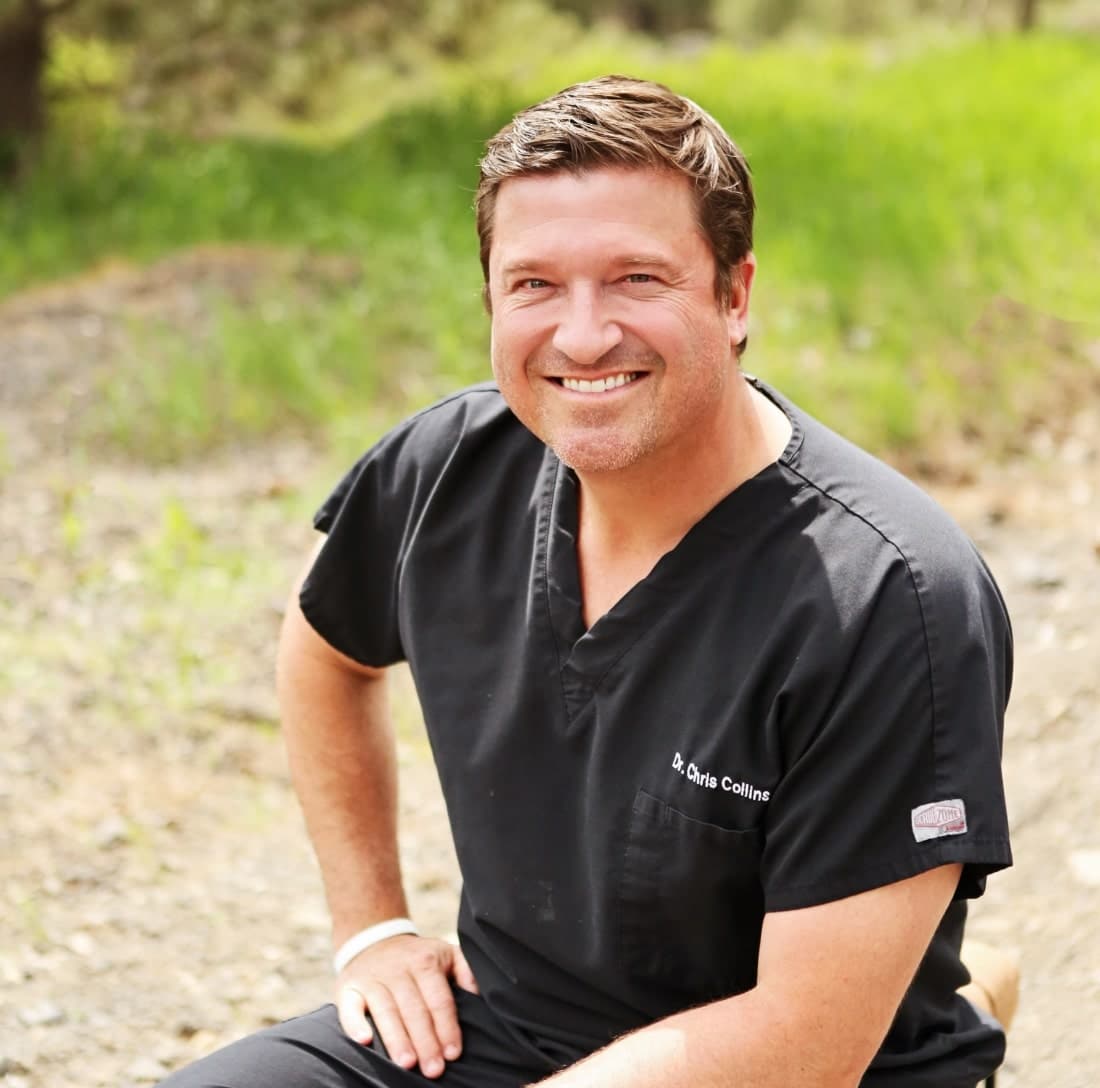
Meet your Cheney implant dentist
A full-arch plan should connect
surgery, restoration, and your future.
Dr. Chris Collins has practiced at Collins Family Dentistry since 2005. He earned his undergraduate degree in biology from Washington State University and his dental degree from Creighton University Dental School. The practice has served Cheney families since 1970 and provides implant, restorative, cosmetic, orthodontic, and family dentistry from its 1st Street office.4
Preserve what is worth preserving
Full-arch treatment begins by deciding which teeth remain predictable—not automatically removing every tooth.
Plan the final restoration first
Implant positions should support the intended bite, smile, hygiene access, and prosthetic design.
Build maintenance into the treatment
Long-term success depends on what happens after the bridge is delivered.
Care after All-on-4
Fixed does not mean
maintenance-free.
The American College of Prosthodontists emphasizes daily cleaning and professional maintenance for full-arch implant restorations. The exact tools and visit interval should reflect your prosthesis design, dexterity, tissue health, smoking history, periodontitis history, and other risk factors.3
Brush the prosthesis and gumline
Use the brush and technique recommended for your bridge, implants, and surrounding tissues.
01Clean where a standard brush cannot reach
Floss threaders, implant floss, interdental brushes, or a water irrigator may be recommended based on access.
02Keep risk-based maintenance visits
Your dental team monitors tissue inflammation, hygiene, bite, screws, components, and prosthetic wear.
03Report pain, movement, swelling, or a bite change
A loose or painful implant restoration deserves prompt professional evaluation.1
04All-on-4 dental implant FAQs
Clear answers before
a life-changing decision.
These answers are educational. Your examination, imaging, health history, and treatment goals determine what applies to you.
Ask Dr. Collins↗01What are All-on-4 dental implants?
All-on-4 is a full-arch dental implant treatment concept in which four strategically positioned implants commonly support a fixed bridge replacing the teeth in an upper or lower arch. Two posterior implants may be angled to use available bone. The final implant number and design must be confirmed through individualized planning.
02Can I receive temporary teeth on the same day?
Possibly. A fixed provisional bridge may be attached on the day of surgery when the implants achieve adequate primary stability and the clinical criteria for immediate loading are met. If those criteria are not met, a different temporary restoration and healing sequence will be recommended.
03Does All-on-4 always eliminate the need for bone grafting?
No. The concept is designed to use available bone efficiently, and angled posterior implants may help avoid grafting in some patients. Bone or soft-tissue grafting may still be necessary depending on anatomy, infection, esthetic needs, implant stability, and the final restorative plan.
04Who may be a candidate for All-on-4 implants?
Potential candidates are generally adults missing most or all teeth in an arch, living with failing teeth, or seeking greater stability than a removable denture provides. Candidacy also depends on medical health, gum health, bone anatomy, medications, smoking, healing capacity, hygiene ability, and treatment goals.
05How long does the All-on-4 process take?
The surgical and provisional phase may be completed in one coordinated visit for qualifying patients, but the complete process usually extends over several months while the implants integrate and the final restoration is designed and delivered. Preparatory treatment can lengthen the timeline.
06How do I clean a fixed full-arch implant bridge?
You will brush the restoration and clean underneath it using the tools recommended for its design. These may include implant floss, floss threaders, interdental brushes, and a water irrigator. Professional maintenance is also necessary to monitor the tissues, bite, implants, screws, and prosthesis.
07How much do All-on-4 dental implants cost in Cheney?
Cost varies because treatment may include imaging, extractions, grafting, anesthesia or sedation, implant components, a temporary bridge, the final prosthesis, and one or two arches. Collins Family Dentistry can provide a written estimate after evaluating your needs and defining what the proposed fee includes.
08Are All-on-4 teeth removable?
A fixed All-on-4 bridge is not removed by the patient. It is secured to the implants and is normally removed only by the dental team when clinically necessary. This differs from a snap-in implant denture, which the patient removes for daily cleaning.
09How long do All-on-4 dental implants last?
Implants and the prosthetic bridge are different components and may have different service lives. Longevity depends on health, smoking, hygiene, bite forces, implant integration, prosthetic material, maintenance, and complications. No responsible provider can guarantee a lifetime result.
10What are the risks of full-arch dental implants?
Dental implant risks can include infection, delayed healing, nerve or sinus injury, implant failure, difficulty cleaning, tissue inflammation, screw or prosthetic complications, and an unsatisfactory bite. Your consultation should review risks specific to your anatomy and health history.
Clinical references
Built on credible information,
not implant marketing alone.
This page was reviewed against patient safety information, prosthodontic maintenance guidance, manufacturer documentation for the All-on-4 treatment concept, and the practice’s official service information. It is educational and does not replace diagnosis or informed consent.
- 01U.S. Food and Drug Administration
Dental Implants: What You Should Know — benefits, risks, candidacy considerations, healing, and maintenance.
Review FDA guidance ↗ - 02Nobel Biocare
All-on-4® Treatment Concept — four-implant full-arch design, tilted posterior implants, and immediate provisionalization criteria.
Review treatment documentation ↗ - 03American College of Prosthodontists
Position Statement: Maintenance of Full-Arch Implant Restorations — home hygiene, professional maintenance, and prosthesis management.
Review ACP guidance ↗ - 04Collins Family Dentistry
Official practice information for Dr. Chris Collins, dental implant services, location, telephone number, and office hours.
Review practice information ↗
Full-arch dental implants close to home
Explore All-on-4 dental implants
in Cheney, WA.
Collins Family Dentistry provides comprehensive implant and restorative dentistry at 1841 1st Street in Cheney, near Cheney-Spokane Road. Start with a consultation to learn whether All-on-4, another fixed full-arch design, a removable implant denture, or a different restorative plan fits your needs.
All-on-4® is a registered trademark of Nobel Biocare Services AG. Treatment descriptions are general educational information. A clinical examination and appropriate imaging are required to determine diagnosis, candidacy, implant number, need for grafting, loading protocol, timeline, risks, fees, and expected outcomes.