Oral appliance therapy in Cheney, Washington
A smaller appliance. A serious sleep plan.
Physician-directed oral appliance therapy for appropriate adults with obstructive sleep apnea, with dental fitting and ongoing monitoring.

The Collins point of view
Snoring alone cannot diagnose sleep apnea. Treatment begins with a medical evaluation and sleep testing. When a physician prescribes oral appliance therapy, a custom dental appliance may help hold the jaw forward during sleep to support a more open airway.
What care can include
The treatment should fit the person.
Your examination determines which options make sense and which ones do not.
Medical diagnosis first
Obstructive sleep apnea is a medical condition. A qualified medical provider orders or interprets sleep testing and establishes the diagnosis.
Custom appliance
A fitted, adjustable appliance is made for the teeth and bite rather than purchased as a generic over-the-counter device.
Comfort and titration
The position is adjusted gradually while comfort, symptoms, jaw response, and dental fit are monitored.
Effectiveness follow-up
Follow-up with the treating physician and repeat testing may be recommended to confirm that therapy is working.
Care inside the Cheney practice
This is what personal care looks like.
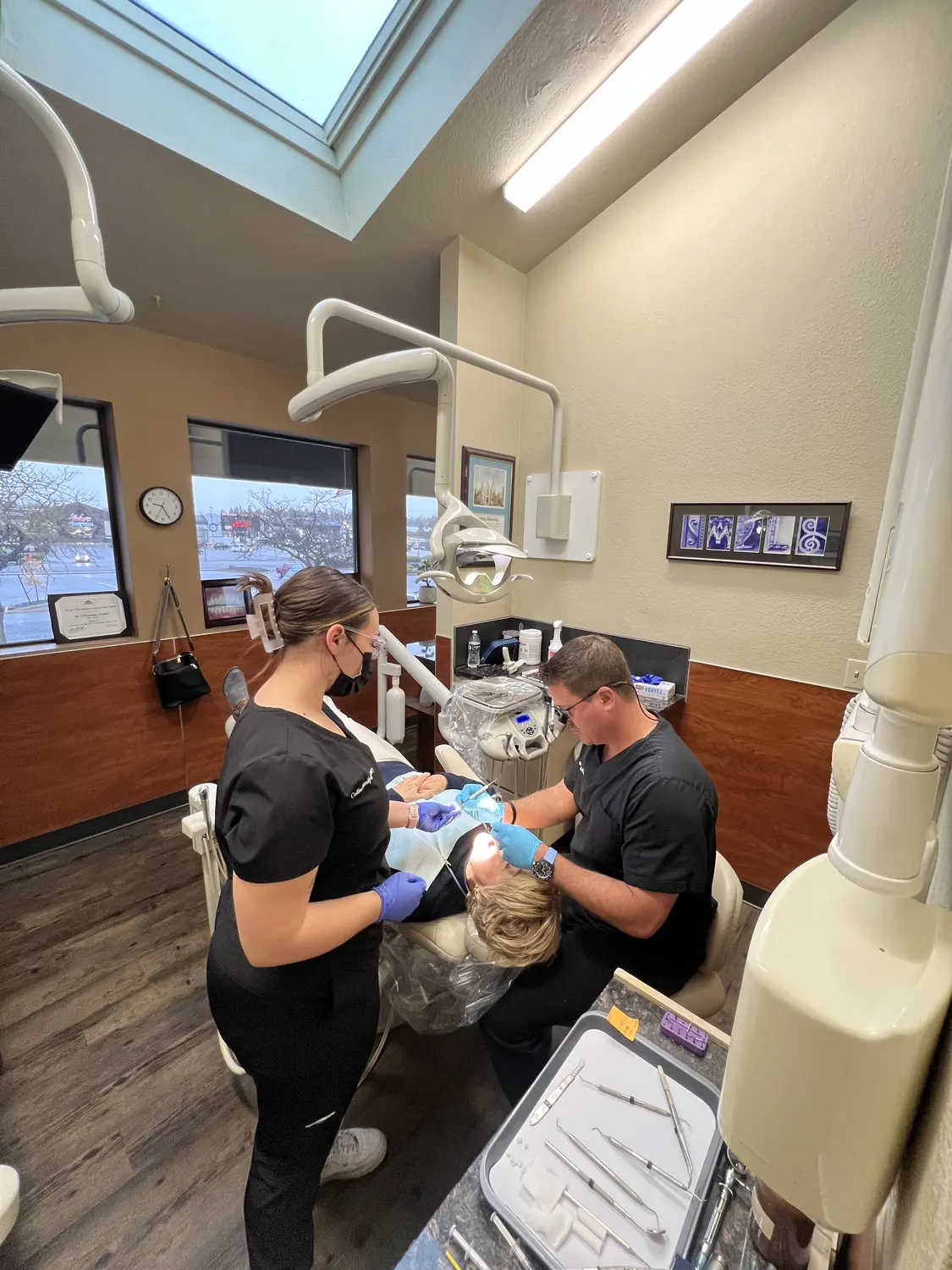
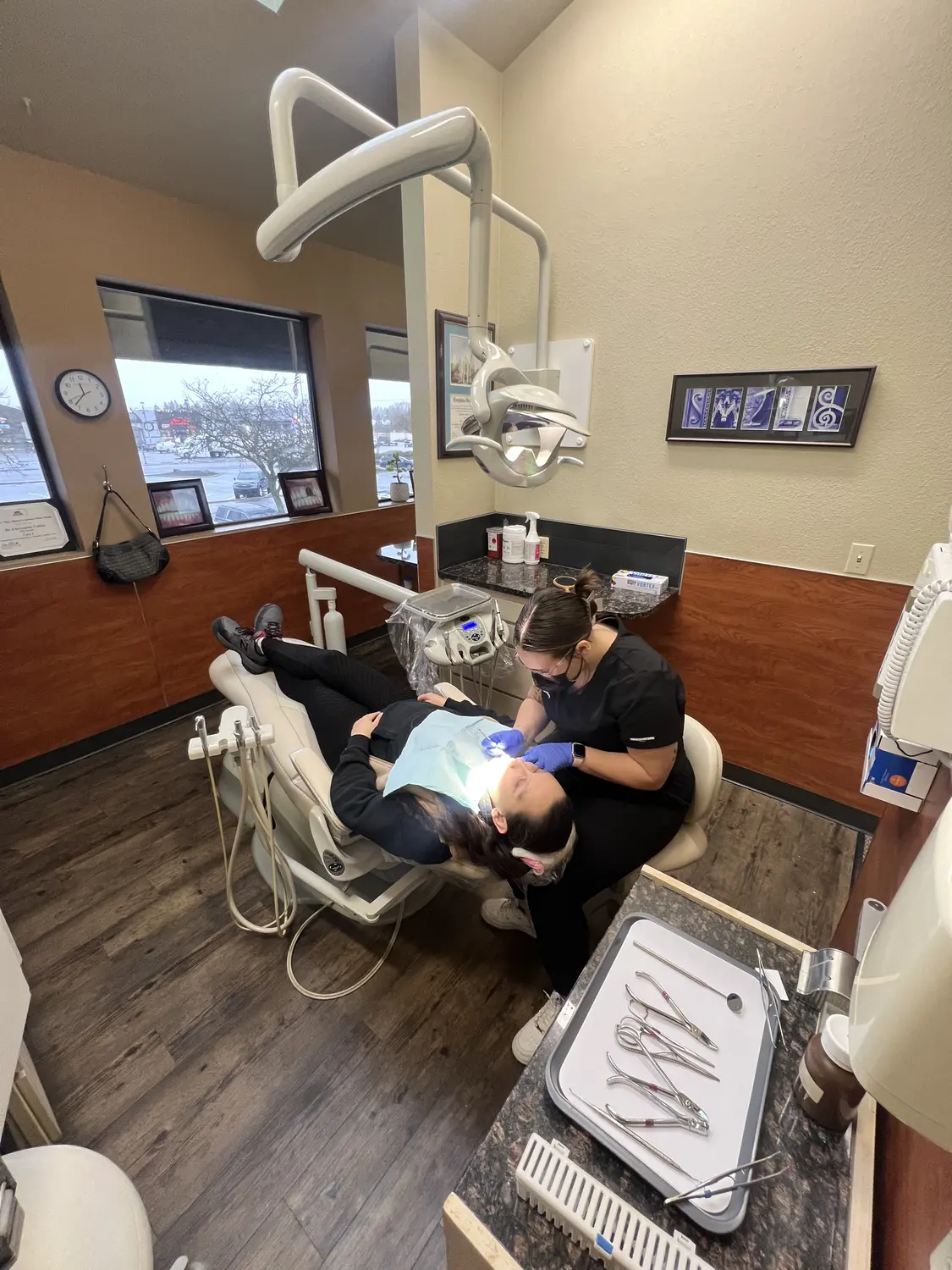
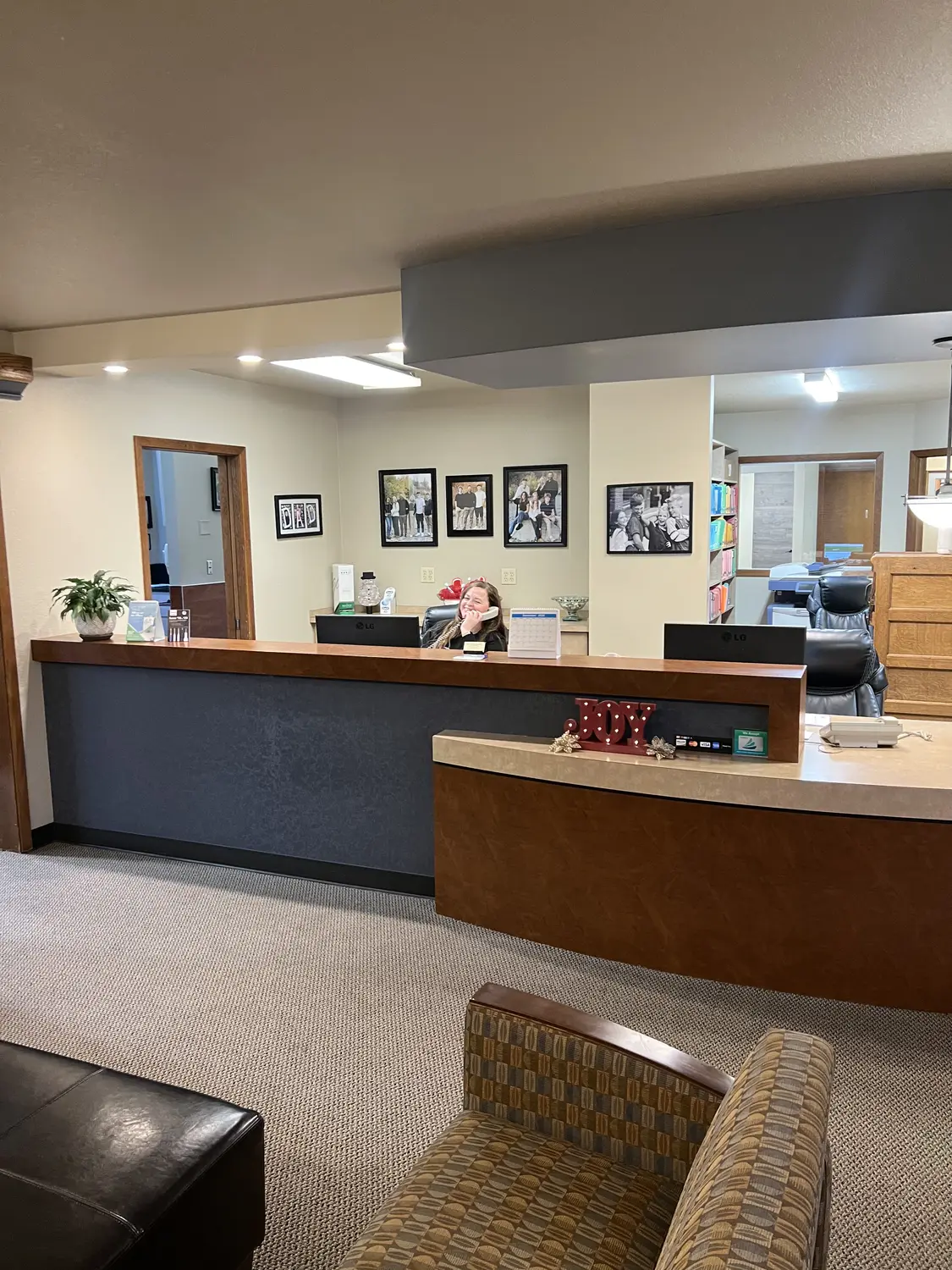
The photographs and video on this page were created inside Collins Family Dentistry—not pulled from a stock library.
How the plan comes together
Clear steps. No mystery.
You should understand what comes next, why it matters, and where you still have choices.
- 01
Medical evaluation
Symptoms and risk are reviewed by a medical provider, who may prescribe a sleep study.
- 02
Dental screening
Teeth, gums, jaw joints, bite, and ability to support an appliance are examined.
- 03
Fit and adjust
The appliance is delivered and advanced in controlled steps based on comfort and response.
- 04
Monitor over time
Dental and medical follow-up track effectiveness, side effects, appliance condition, and bite changes.
Common questions
Useful answers before your examination.
These answers are general. Your diagnosis, health history, and goals shape the recommendation.
Is an oral appliance a replacement for CPAP?
It can be an alternative for some adults, depending on diagnosis, severity, anatomy, medical guidance, and CPAP tolerance. It is not the right therapy for everyone.
Can I use an over-the-counter snoring guard?
A generic device is not a substitute for medical diagnosis or a custom appliance monitored for effectiveness and dental side effects.
What side effects can occur?
Temporary jaw or tooth discomfort, salivation changes, dry mouth, and longer-term bite or tooth-position changes can occur. Follow-up is important.
How do we know whether the appliance works?
Symptom improvement is useful but does not prove that breathing events are controlled. The treating physician may recommend repeat sleep testing.
Your next visit
Ready for a clearer path forward?
Tell us what is bringing you in. Our Cheney team will help you find the right place to begin.